
OPEN RESEARCH
PUBLIC LAB COMPLEX
Five interconnected experimental spaces, where researchers, artists, and the public work together, without predefined outcomes, and without institutional walls.
WHAT IT IS
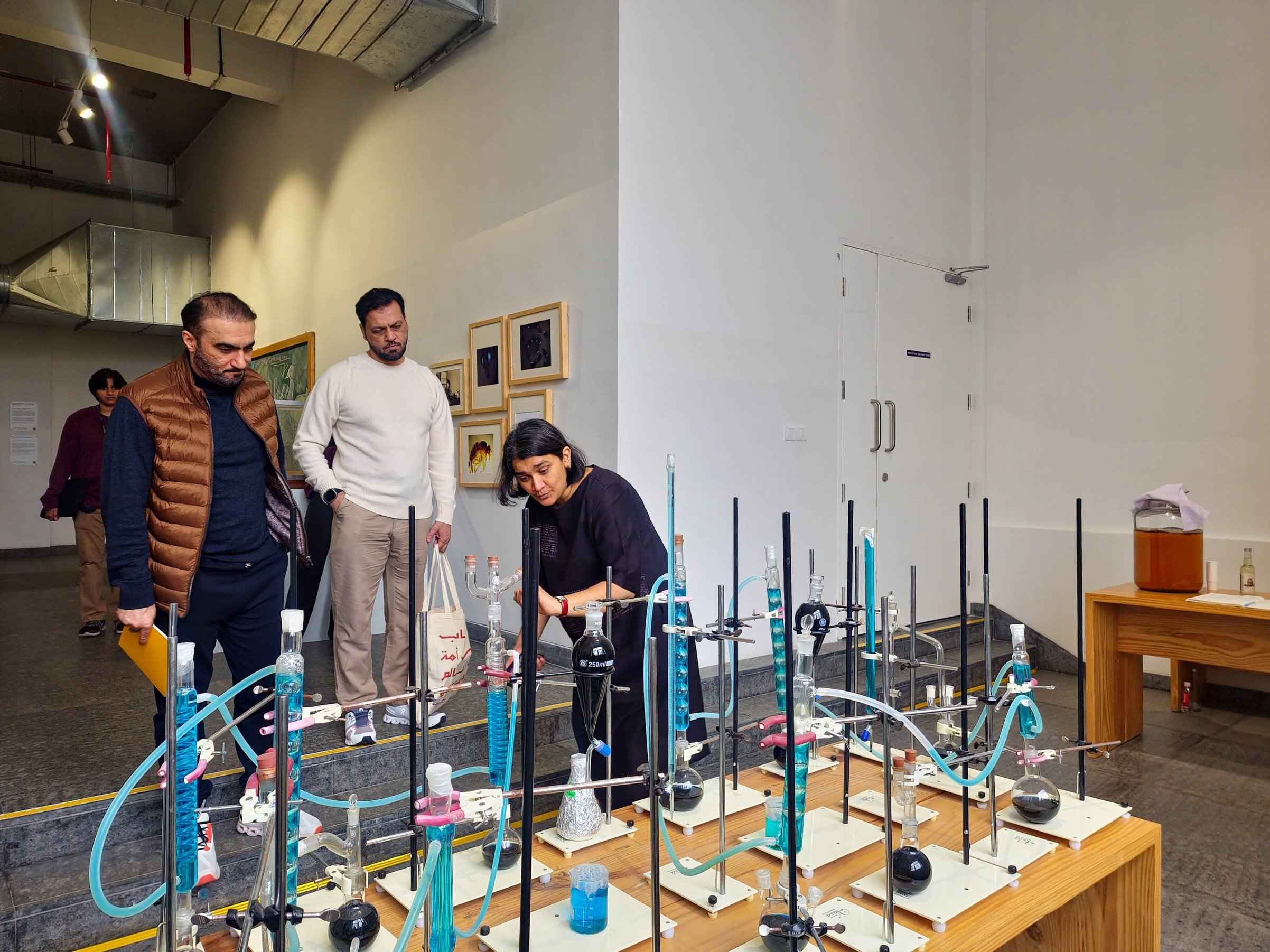
The Public Lab Complex (PLC) is SGB's pioneering institutional infrastructure for open research. Built on the premise that research should not remain confined within academic institutions, it brings together experienced researchers and young adults in a shared space. This is designed for unusual questions, unexpected collaborations, and the kind of cross-disciplinary thinking that rarely happens within a single field.
The institutional framework of the PLC, the first of its kind in India, is the subject of a 2025 paper by Founding Director Jahnavi Phalkey in The CRISPR Journal, which sets out the model and makes the case for its replication. Three of the five labs already carry the commitment of founding philanthropic partners, generously seed-funded by the TTK Prestige for the Food Lab, the Samagata Foundation for the Theory Lab, and Tata Trusts for the Materials Lab and Workshop.
OUR VALUES
Open access and open-ended
The labs are open to any curious individual, free to develop their own experiments without predefined outcomes.
Unusual clustering
Five interconnected labs designed to trigger unexpected directions of inquiry, cutting across the sciences, engineering, and art.
Lab for Peers
Experienced and young researchers work side-by-side, nurturing a culture of equality and playful experimentation.

The labs are designed to work across each other. A compound developed in the Nature Lab might be tested in the Materials Lab; a fermentation experiment in the Food Lab might originate in the Nature Lab. The interconnection is by design.
THE RESEARCH MODEL
Each lab accommodates up to fifteen researchers simultaneously, across three tracks.
25 Public Lab Fellows per year
Five fellows per lab, each hosting a dedicated cohort through the Public Labs Fellowship.
25 Experimentors per year
Each Fellow mentors one young adult through the Experimentor Programme, our flagship mentorship initiative.
50 Affiliates per year
Researchers who join through external partnerships or bench-fee access, filling the remaining ten positions in each lab.