
INTELLIGENCE | Exhibition Season Open Call (Closed)
This open call is now closed
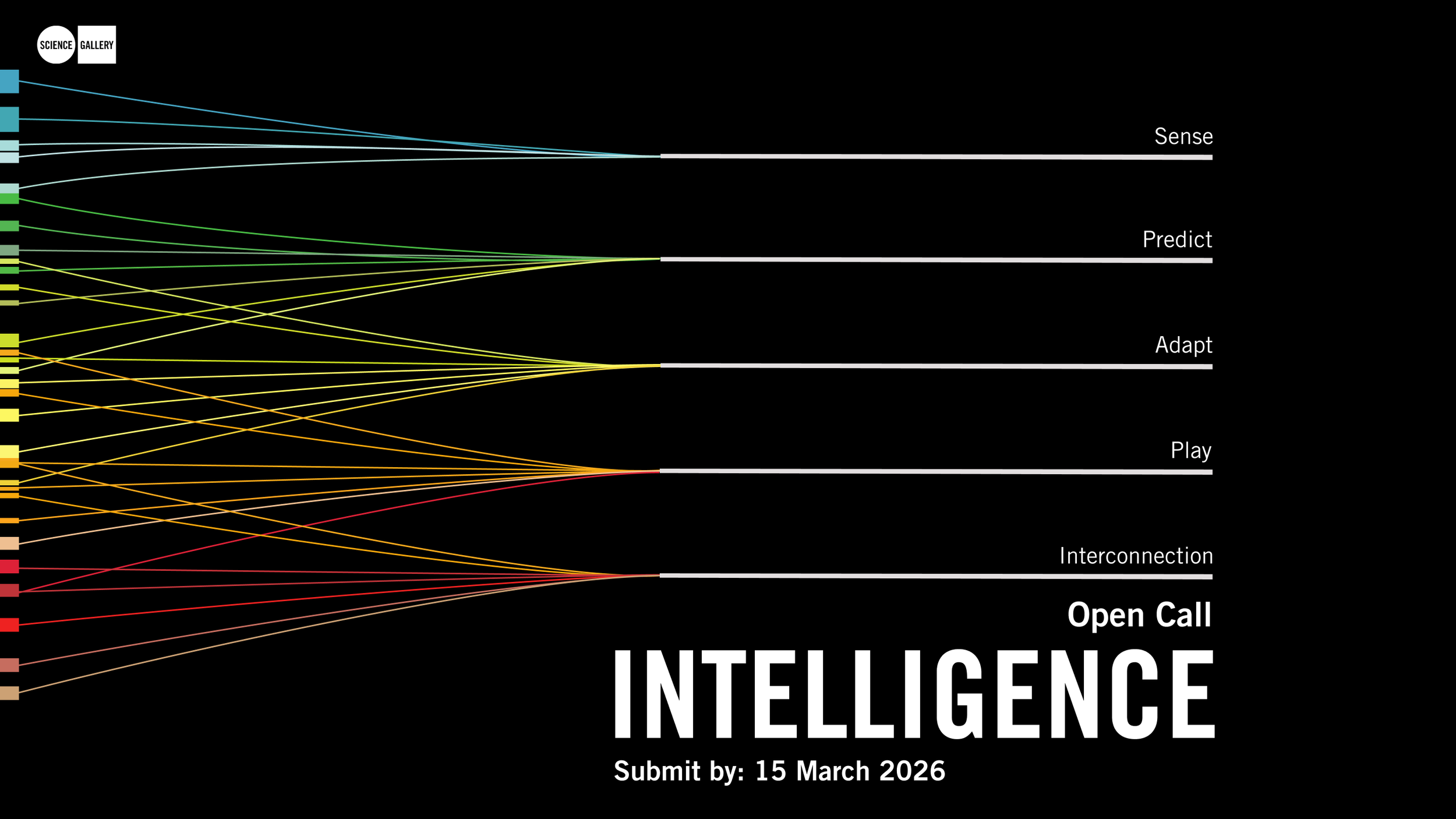
Keywords: Sort, Sense, Predict, Rationalise, Analyse, Experiment, Adapt, Error, Play, Intuition, Hindsight, Imagine, Speculate, Singularity, Interconnection
“Are you intelligent?”— we have all faced the existential dread of this question.
What is intelligence? We have known it as a metric all our lives and have sought to quantify it obsessively. Rarely have we paused to question our understanding of intelligence and wondered what it is useful for.
In the 19th and 20th centuries, we saw a proliferation of efforts to measure intelligence– from phrenology and IQ tests to the Army Alpha Test, the Binet-Simon test, the Quetelet’s Bell Curve, the Wechsler scales and others. At the same time, as if to counterweigh, there have been efforts to propose emotional intelligence, creativity, interpersonal skills, and cultural intelligence as valid benchmarks.
A little probing reveals the entanglement of such endeavours with power and social order: colonial testing regimes for racialised hierarchies, for organising the military or education, and for social stratification. These tests claimed to reveal genius and marked some as the cretin, the unintelligent, and the idiot.
Is intelligence present in instinct and intuition, in hindsight and imagination, in error and play? Is it present in daydreams? In a system glitch like a déjà vu– a complex memory process? And where does intelligence come from? Is it learned or inherited? Plasticity unsettles any fixed origins or outcomes of intelligence and makes space for the ability to improve, to learn from mistakes, and to remake ourselves.
Where do we find intelligence? In animals, plants, and ecosystems? The swarm intelligence that depends on the group collectively finding the shortest path to food such as by ants, the ability of birds and fishes to navigate, roots sensing soil, bees choosing a new nest through a decentralized voting system, or slime mold solving complex problems.
What if intelligence is an emergent property, as a set of novel characteristics or behaviors that appear in a complex system when its individual components interact, but are absent in those components when isolated? “The whole is greater than the sum of its parts”— a jury’s consensus, the beating of a heart from individual heart cells, the ability of countries to cooperate, the appearance of symmetrical patterns within crystals of ice.
Our interests have taken a new turn today: we simulate intelligence. We rely on complex and predictive neural networks for everyday decision making. ‘Intelition’ is the new paradigm now where humans and machines co-create. In this context, what are the material foundations of logic, mathematics, computation, labour, data, and power?
INTELLIGENCE is an invitation to think beyond singular, human-centered, or claims around machine intelligence. We invite a mirror, a provocation, and curiosity to reimagine intelligence— biological, artificial, creative, collective, and poetic.
For this exhibition-season, we are looking to work with individuals or groups—preferably from across career and disciplinary backgrounds—who are critically exploring intelligence in its diverse forms through research and art in both the contemporary and historical context. We seek applications that are artistic or scientific inquiries, or both.
Let us doubt, think, and (un)learn together.
Resources:
DapDip. “Understanding Intelition: The Future of AI in Collaboration.” DapDip. January 5, 2025.
Gefter, Amanda. “What is Intelligence?” NAUTILUS. October 23, 2025.
Larsen,Erik J. “The Return of the Luddites.” Los Angeles Review of Books. October 31, 2025.
An Emergent Property in Biological Systems.” Next Gen Scientists Foundation. September 19, 2021.
Smith, Christopher. “Critical Technologies.” Anatomies of Power. July 8, 2025.
Submission deadline: 15 March 2026